

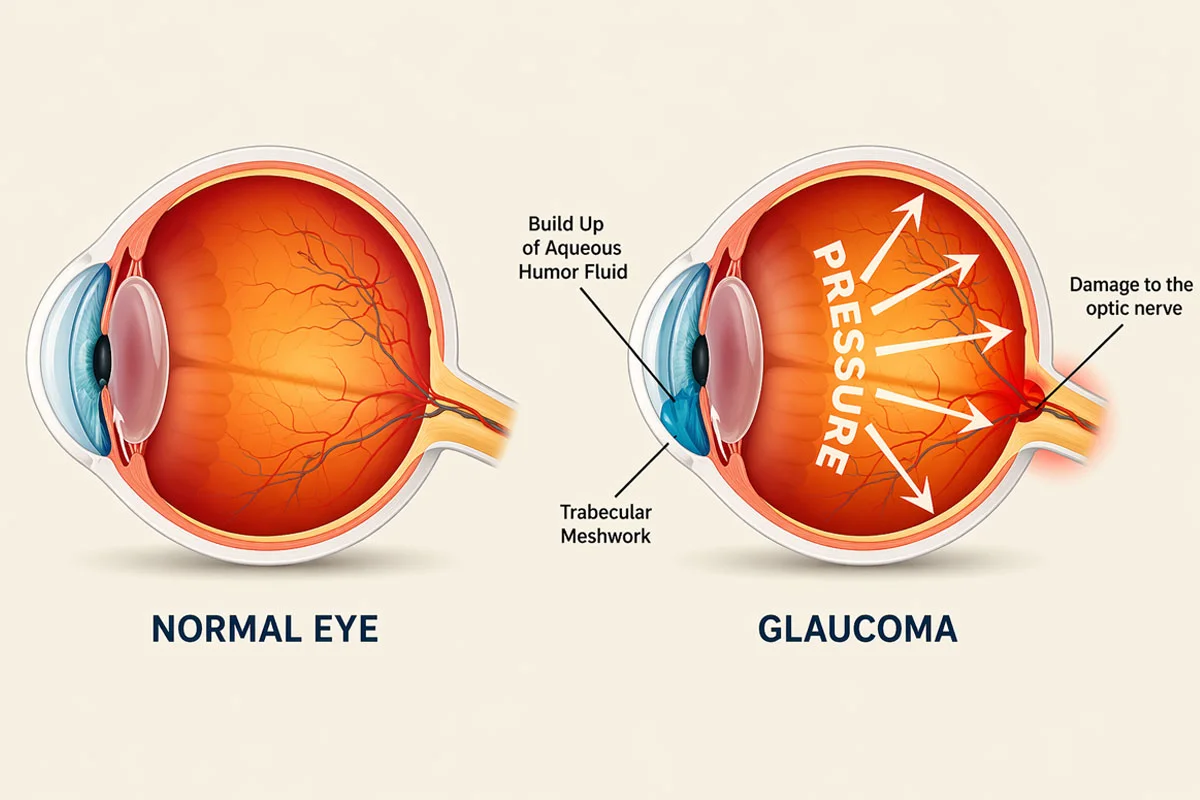
Glaucoma is often called the “silent thief of sight” because it slowly damages vision without noticeable symptoms in the early stages. It is one of the leading causes of permanent blindness worldwide and can affect people of all age groups if not diagnosed and treated on time.
At Advaith Eye Hospital, a leading Glaucoma Hospital in Banashankari, we provide advanced glaucoma diagnosis and treatment in South Bangalore using modern technology and expert eye care to help protect your vision and prevent long-term damage
Glaucoma occurs when increased pressure inside the eye damages the optic nerve, which is responsible for carrying visual signals from the eye to the brain. Once vision loss occurs due to glaucoma, it usually cannot be reversed, making early detection extremely important.
If you experience blurry vision, eye pain, headaches, or gradual loss of side vision, consulting a glaucoma specialist in Banashankari at the earliest can help preserve your eyesight.
In many cases, glaucoma develops slowly and silently without obvious symptoms. Some people may not realize they have glaucoma until noticeable vision loss occurs.
However, certain warning signs may indicate increased eye pressure or optic nerve damage.
Loss of Vision
One of the most serious signs of glaucoma is gradual loss of peripheral (side) vision. Over time, blind spots may develop, affecting everyday activities like driving, reading, or walking safely.
Blurry Vision
Blurred or hazy vision can occur when increased eye pressure affects the cornea and optic nerve. Sudden blurry vision may be a warning sign of acute glaucoma and requires immediate medical attention.
Persistent Headache
High pressure inside the eye may lead to severe headaches, especially around the forehead and eye area. This symptom is more common in angle-closure glaucoma.
Eye Redness
Redness in the eye may indicate increased eye pressure, inflammation, or irritation associated with glaucoma.
Nausea and Vomiting
In acute glaucoma attacks, sudden pressure rise inside the eye can cause:
These symptoms should never be ignored and need urgent eye care treatment.
Pain in the Eye
Eye pain or discomfort may occur when fluid drainage inside the eye becomes blocked. Certain conditions like lens-induced glaucoma can also cause severe eye pain and pressure.
Early Difficulty in Near Vision
Difficulty focusing on nearby objects or early changes in reading vision may sometimes be associated with eye pressure-related problems.
Glaucoma mainly develops when fluid inside the eye does not drain properly. This leads to increased eye pressure, which gradually damages the optic nerve.
At Advaith Eye Hospital in Banashankari, our glaucoma specialists carefully evaluate the root cause before recommending treatment.
Build-Up of Eye Fluid (Aqueous Humor)
The eye naturally produces a fluid called aqueous humor to maintain healthy eye pressure. If the drainage system becomes blocked, pressure increases inside the eye.
Family History and Genetics
People with a family history of glaucoma have a higher risk of developing the disease over time. Regular eye check-ups are important for early detection.
Birth Defects
Some children are born with defects in the eye drainage system, leading to congenital glaucoma.
Eye Injury or Trauma
Blunt injury, accidents, or chemical exposure can damage the eye’s drainage channels and increase the risk of glaucoma.
Eye Infections
Certain eye infections can cause inflammation and scarring, affecting fluid drainage and leading to glaucoma.
Blood Vessel Blockage
Poor blood circulation or blocked blood vessels inside the eye can increase pressure and damage the optic nerve.
Inflammatory Eye Conditions
Inflammatory diseases like uveitis can trigger secondary glaucoma and affect long-term eye health.
There are different types of glaucoma, and each requires specialized diagnosis and treatment.
At our Glaucoma Hospital in Banashankari, we provide treatment for various glaucoma conditions, including:
Our experienced glaucoma specialists use advanced diagnostic equipment to detect the type and stage of glaucoma accurately.
Glaucoma-related vision loss is permanent, but early diagnosis and proper treatment can help slow or stop further damage.
Regular eye check-ups become especially important for:
At Advaith Eye Hospital, as a leading Glaucoma Hospital in Banashankari – South Bangalore, we focus on early detection and personalized glaucoma care to help patients maintain healthy vision for life.
Book your eye consultation today at Advaith Eye Hospital, Banashankari, and take the right step toward protecting your vision before glaucoma silently affects your eyesight.
Medical management of glaucoma with eye drops is the first line of management to lower the pressure in the eyes. Since glaucoma is a lifelong condition, you will have to rely on these eye drops for your lifetime just like any other lifelong medication for diabetes & HTN.
Our experienced glaucoma eye doctors will plan your glaucoma medication considering your condition & the latest treatment used worldwide.
The next common form of treating glaucoma is by laser procedure. These treatment will be considered depending on the severity of glaucoma.
Types of lasers include:
(a) Selective laser trabeculoplasty (SLT): for treatment of primary open angle glaucoma
(b) Argon laser trabeculoplasty (ALT): for treatment of primary open angle glaucoma
(c) Laser peripheral iridotomy (LPI): for treatment of narrow angle glaucoma
Commonly performed surgery for glaucoma is Trabeculectomy, which will be advised when medical management for glaucoma is no longer effective. It’s performed by our highly skilled, experienced glaucoma specialist at Advaith Eye Hospital.
Another surgical treatment for glaucoma is the implantation of glaucoma valves inside the eyes to aid in outward transport of eye fluid (aqueous humor) from the eye, to lower the intra-ocular pressure.
World class technological equipment facilities at Advaith Eye Hospital for glaucoma
Management:
Glaucoma is one of the leading causes of permanent vision loss, and many people search for the right treatment only after symptoms begin affecting daily life. Since glaucoma often develops silently without early warning signs, regular eye check-ups and timely diagnosis are extremely important.
At Advaith Eye Hospital, Banashankari, we provide advanced glaucoma diagnosis and treatment in South Bangalore using modern technology and expert ophthalmology care to help protect your eyesight and prevent long-term vision damage.
Our experienced glaucoma specialists treat different types of glaucoma, including:
If you are experiencing blurry vision, headaches, eye pain, or vision loss, our eye specialists can help with detailed glaucoma screening and personalized treatment.
At our Eye Hospital in Banashankari, glaucoma diagnosis involves a detailed eye examination combined with advanced diagnostic technology. Our ophthalmologists carefully evaluate the health of your optic nerve, eye pressure, and vision to detect glaucoma at an early stage.
Early diagnosis is important because glaucoma-related vision loss is usually irreversible if left untreated.
A dilated eye examination helps doctors closely examine the optic nerve at the back of the eye.
Special eye drops are used to widen the pupils, allowing the doctor to detect optic nerve damage and other signs of glaucoma more accurately.
Gonioscopy is a painless eye test used to examine the drainage angle of the eye, where the iris and sclera meet.
This helps determine whether the glaucoma is:
Understanding the drainage angle helps doctors choose the right glaucoma treatment plan.
Tonometry is performed to measure the pressure inside the eye, also known as intraocular pressure (IOP).
Increased eye pressure is one of the major risk factors for glaucoma and optic nerve damage.
This test checks for loss of side vision or blind spots caused by glaucoma.
Since glaucoma often affects peripheral vision first, this test helps identify vision damage early.
Pachymetry measures the thickness of the cornea.
Corneal thickness can influence eye pressure readings and helps doctors better assess glaucoma risk and treatment needs.
Glaucoma treatment depends on:
At Advaith Eye Hospital, Banashankari, we offer advanced glaucoma treatment options including:
Our goal is to lower eye pressure and prevent further vision loss.
In many cases, glaucoma treatment begins with eye drops that help reduce eye pressure either by decreasing fluid production or improving fluid drainage.
Laser treatment is one of the most effective and commonly used options for glaucoma management.
At our Glaucoma Eye Hospital in Banashankari, we offer advanced laser procedures for safe and effective pressure control.
Laser Trabeculoplasty is commonly used for
In this procedure:
Two commonly used techniques include:
SLT is now widely preferred due to its precision and effectiveness.
This laser treatment is used for Angle Closure Glaucoma.
In this procedure:
This procedure is also called Laser Iridotomy Surgery.
If medications and laser treatment do not adequately control eye pressure, glaucoma surgery may be recommended.
At our Eye Hospital in Banashankari, experienced glaucoma surgeons perform advanced surgical procedures to help protect the optic nerve and preserve vision.
Trabeculectomy is one of the most common glaucoma surgeries.
During the procedure:
This surgery helps prevent further optic nerve damage and vision loss.
In this procedure:
This surgery is often recommended for complex or advanced glaucoma cases.
MIGS procedures are modern glaucoma treatments performed using:
These procedures are safer, less invasive, and usually offer faster recovery.
The iStent is a tiny titanium implant placed inside the eye’s drainage system.
It helps improve fluid flow and reduce eye pressure naturally.
Canaloplasty is a non-penetrating glaucoma surgery mainly used for open-angle glaucoma.
A small tube is inserted into the eye’s drainage canal to widen it and improve fluid drainage.
This advanced glaucoma procedure removes blocked tissue inside the drainage angle using a specially designed blade.
It improves fluid outflow and helps lower intraocular pressure safely.
Book your glaucoma consultation today at Advaith Eye Hospital, Banashankari, and take the right step toward protecting your vision for the future.
Glaucoma is a common eye disease that can lead to permanent vision loss if not detected early. The best way to prevent glaucoma-related blindness is through regular eye check-ups and early diagnosis.
At Advaith Eye Hospital, Banashankari, our experienced glaucoma specialists help detect glaucoma symptoms at an early stage using advanced eye screening technology. Early treatment can help control eye pressure and protect the optic nerve from damage.
Depending on the condition, glaucoma can be managed with:
Routine eye examinations are especially important for people above 40 years, diabetic patients, and those with a family history of glaucoma.
Tunnel vision is a serious symptom that can develop in advanced glaucoma if the disease is not treated on time.
In glaucoma, side vision (peripheral vision) slowly gets damaged first. Over time, the field of vision becomes narrower, making it feel like you are looking through a tunnel.
This means:
Early glaucoma diagnosis and treatment can help prevent tunnel vision and protect long-term eyesight.
If you experience symptoms like blurry vision, headaches, eye pain, or gradual vision loss, a detailed glaucoma eye examination is recommended.
At our Eye Hospital in Banashankari, glaucoma is diagnosed through a painless and comprehensive eye evaluation. During the examination:
People with a family history of glaucoma are at higher risk and should undergo regular eye pressure and optic nerve screening for early detection.
After glaucoma treatment, regular follow-up visits are important to monitor healing and control eye pressure.
At Advaith Eye Hospital, Banashankari, our eye specialists provide continuous care and personalized follow-up plans based on your recovery progress. Initially, patients may need weekly check-ups, and the frequency gradually reduces as the condition stabilizes.
Doctors may also prescribe glaucoma medications and eye drops to ensure safe healing and long-term eye health.
Glaucoma mainly occurs due to increased pressure inside the eye, known as intraocular pressure (IOP).
After detailed glaucoma testing, our specialists use different treatment methods to reduce eye pressure and protect the optic nerve. Treatment options may include:
The treatment plan depends on the type and severity of glaucoma.
Cataract and glaucoma are both common eye conditions, but they affect vision differently.
Cataracts cause cloudy or blurry vision because proteins inside the eye lens begin to break down and collect together over time. Cataract-related vision loss is usually reversible with cataract surgery.
Glaucoma, however, damages the optic nerve due to increased eye pressure and can cause permanent vision loss if left untreated.
At our Eye Hospital in South Bangalore, our specialists perform detailed glaucoma eye tests and cataract evaluations to provide the right treatment at the right time.
No, glaucoma surgery is generally not painful.
During the procedure:
After surgery, some patients may experience mild irritation, redness, or discomfort for a short period during healing. These symptoms usually improve with medications and proper post-operative care.
At Advaith Eye Hospital, Banashankari, our experienced glaucoma surgeons use advanced techniques to ensure safe, comfortable, and effective glaucoma treatment for every patient.