

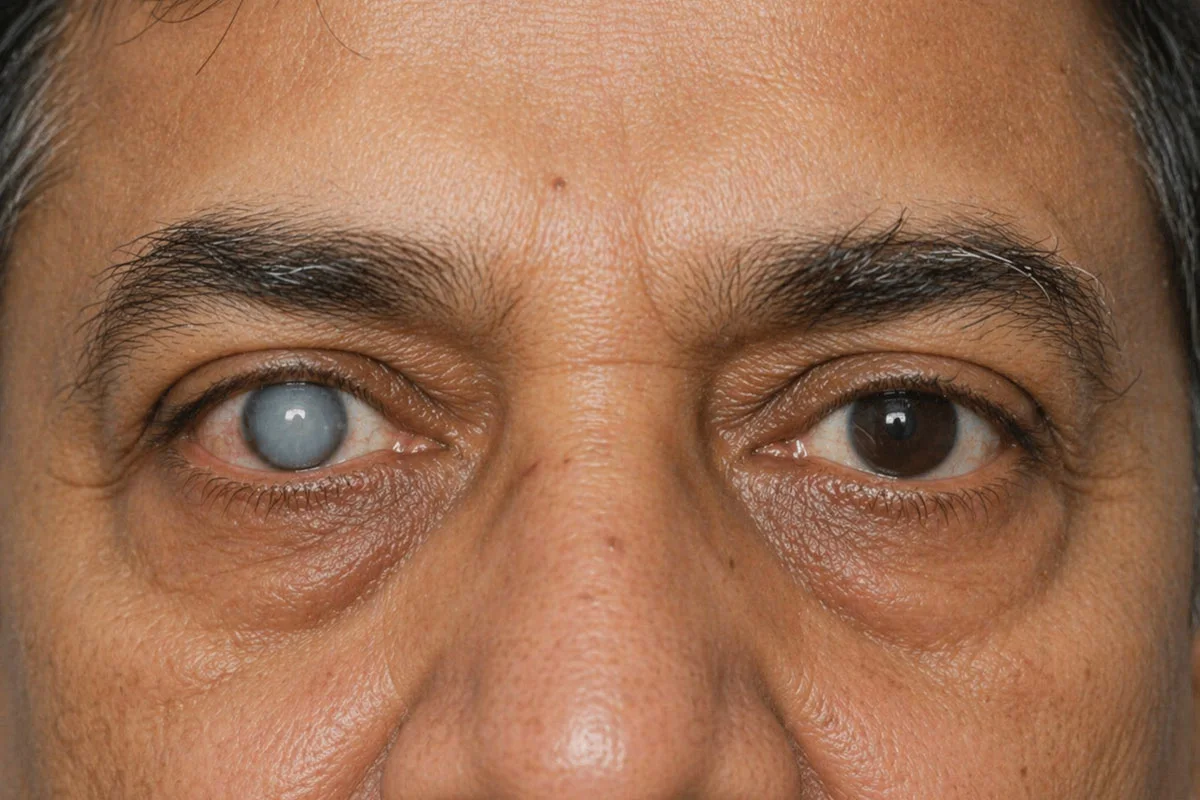
A cataract is a common eye condition where the natural lens of the eye becomes cloudy, leading to unclear or blurred vision. Normally, the lens helps focus light onto the retina for sharp and clear eyesight. When the lens turns cloudy, everyday activities such as reading, watching TV, driving, or recognizing faces may become difficult.
Cataracts usually develop slowly over time and are most commonly seen in older adults. However, they can also occur due to eye injuries, medical conditions like diabetes, prolonged exposure to sunlight, or long-term use of certain medications. The good news is that cataracts can be safely and effectively treated with modern cataract surgery.
If you are experiencing vision problems, consulting an experienced eye specialist in Banashankari at the right time can help protect and restore your vision.
Cataract symptoms can vary depending on the stage and severity of the condition. Some people notice only mild vision changes in the beginning, while others may experience significant difficulty with daily activities.
Cloudy or Blurred Vision
One of the earliest signs of cataract is blurry or foggy vision. Objects may appear unclear, hazy, or out of focus, even while wearing glasses.
Sensitivity to Light and Glare
Bright sunlight, vehicle headlights, or indoor lighting may feel uncomfortable and cause glare, making it difficult to see clearly.
Poor Night Vision
Many people with cataracts struggle to see properly at night. Driving after dark may become difficult because of glare from headlights and reduced visibility.
Fading or Yellowish Colors
Colors may no longer appear bright and vibrant. Some people notice that colors start looking dull, faded, or slightly yellow.
Halos Around Lights
You may begin seeing rings or halos around lights, especially during the evening or nighttime.
Double Vision in One Eye
In some cases, cataracts can cause double vision in one eye because the cloudy lens affects how light enters the eye.
If you notice any of these symptoms, it is important to visit a trusted eye hospital in Banashankari for a complete eye check-up and early diagnosis.
There are several reasons why cataracts may develop, with aging being the most common cause. Other health and lifestyle factors can also increase the risk of cataracts.
Aging
As we grow older, natural changes occur in the eye lens. Over time, proteins in the lens start breaking down, causing the lens to become cloudy.
Eye Injuries
Previous eye injuries or trauma can damage the lens and lead to cataract formation immediately or even years later.
Family History
People with a family history of cataracts may have a higher chance of developing the condition.
Medical Conditions Like Diabetes
Health conditions such as diabetes can increase the risk of cataracts and may cause them to develop at an earlier age.
Excessive UV Exposure
Long-term exposure to sunlight without proper eye protection can damage the lens and contribute to cataract formation.
Long-Term Steroid Use
Using corticosteroid medications for a long period may increase the risk of cataracts.
Smoking and Alcohol Consumption
Smoking and excessive alcohol intake can lead to oxidative stress in the eyes, increasing the chances of developing cataracts.
With an experience of operating more than 10,000 cataract surgeries, our senior cataract surgeon, Dr. Nataraj, is one of the best eye surgeons in Bangalore for cataract surgery.
Our world class technological facility for cataract management:
Microincision phacoemulsification cataract surgery (MICS)
In keeping pace with world class technological advancements in laser cataract treatment, we have advanced top of the line Carl Zeiss microscope and Alcon centurion phacoemulsification machine with OZIL technology for management of cataract.
Our latest world class surgical options @ Advaith Eye Hospital are focused on safety and faster visual recovery, as compared to any other technique of cataract treatment.
Technology is our core competency & state of the art major OT
With an array of premium intraocular lens ensures safe and best visual outcomes.
At our Eye Hospital in Banashankari, we provide advanced and safe cataract diagnosis and treatment for patients experiencing blurry vision, glare, or difficulty seeing clearly. Cataracts are a common age-related eye condition, but with early diagnosis and modern treatment methods, vision can be restored safely and effectively.
Our experienced cataract specialists in Banashankari offer personalized treatment for different types of cataracts, including:
We also handle complex cataract cases with advanced technology and expert care.
If you are noticing changes in your vision, our eye doctors are here to guide you with complete diagnosis, treatment options, and preventive eye care.
To diagnose cataracts accurately, our eye specialists perform a detailed eye examination. Along with understanding your medical history and vision problems, a few important tests are done to check the condition of your eye lens and overall eye health.
Retinal Examination
During this test, eye drops are used to widen the pupil so the doctor can get a clear and detailed view of the retina and lens.
Using advanced instruments like an ophthalmoscope, the doctor checks for signs of cataract and other eye-related conditions before recommending treatment.
Visual Acuity Test
This is a basic vision test where you are asked to read letters from an eye chart placed at a distance.
Each eye is tested separately to understand how clearly you can see. This helps the doctor identify vision loss caused by cataracts and decide the right treatment option.
Slit Lamp Examination
A slit lamp is a special microscope with a bright light that allows the doctor to examine the eye in detail.
With this test, the doctor checks the:
Even small cataracts or minor eye problems can be detected accurately through this examination.
Cataracts usually develop slowly with age. In the beginning, symptoms may be mild, but over time they can affect daily activities like reading, driving, watching TV, or recognizing faces.
At our cataract eye hospital in Banashankari, we offer advanced treatment options depending on the stage and severity of the cataract.
Eyeglasses for Early Cataracts
In the initial stages, when vision problems are mild, doctors may prescribe eyeglasses to improve vision temporarily.
However, cataracts cannot be permanently removed with glasses alone.
Cataract Surgery
When cataracts start affecting daily life, cataract surgery becomes the most effective treatment option.
During the procedure, the cloudy natural lens is removed and replaced with a clear artificial lens called an Intraocular Lens (IOL) to restore clear vision.
Modern cataract surgery is:
It is also effective for congenital and advanced cataracts.
Laser Cataract Surgery
For certain patients with dense or advanced cataracts, doctors may recommend Laser Cataract Surgery for greater precision and improved safety.
Laser technology helps surgeons create accurate openings and soften the cataract before removal.
Traditional Cataract Surgery
In traditional cataract surgery:
The procedure usually takes only a short time, and recovery is generally smooth.
Laser-Assisted Cataract Surgery
Corneal Incision
Using advanced femtosecond laser technology, surgeons create precise openings in the eye to access the cataract safely.
This improves surgical accuracy and enhances recovery.
Capsulotomy
Sometimes, after cataract surgery, the lens capsule may become cloudy over time.
Doctors use laser treatment to create an opening in the cloudy capsule and restore clear vision again.
Cataract Fragmentation
Laser technology is also used to soften and break the cataract into smaller pieces for easier removal.
This helps reduce stress on the eye and improves surgical precision.
Our experienced cataract surgeons in Banashankari take every precaution to ensure safe and effective treatment with minimal tissue damage.
After cataract surgery, most patients experience little to no pain and recover quickly. Following proper care instructions is important for faster healing.
Important Care Tips:
You may notice brighter and clearer vision after surgery, which is completely normal.
Although cataracts are commonly related to aging, certain precautions may help reduce the risk and protect eye health.
Tips to Protect Your Eyes:
If you are experiencing:
If you or your loved one are experiencing blurry vision, glare, or difficulty seeing clearly, it is natural to have questions about cataracts and treatment options. At Advaith Eye Hospital, Banashankari, our experienced eye specialists are here to guide you with advanced and safe cataract care.
Below are some commonly asked questions about cataract diagnosis, cataract surgery, recovery, and treatment options.
Yes, cataract surgery is considered one of the safest and most successful eye procedures performed today.
At Advaith Eye Hospital in Banashankari, our experienced cataract surgeons use advanced technology and modern surgical techniques to ensure safe and painless treatment. Most patients experience little to no pain during the procedure.
During the surgery, the cloudy natural lens is carefully removed and replaced with an artificial lens called an Intraocular Lens (IOL) to restore clear vision.
We also provide advanced laser cataract surgery in Banashankari for eligible patients to improve precision and comfort during treatment.
At our Eye Hospital in Banashankari, cataracts are diagnosed through a complete eye examination performed by experienced eye doctors.
The diagnosis usually includes:
These tests help our specialists understand the condition of your eye lens and determine the best cataract treatment option for you.
Based on the severity of the cataract, doctors may recommend:
Recovery after cataract surgery is usually smooth and quick.
Some patients may experience mild irritation, watering, or slight discomfort in the first few days after surgery. Our doctors may prescribe medications and eye drops to support healing and reduce discomfort.
In most cases:
During recovery, it is important to:
Before resuming all daily activities, consult your cataract specialist for proper guidance.
If cataracts are not treated on time, vision may gradually worsen over the years.
Untreated cataracts can lead to:
In some cases, cataracts can become hyper-mature, making surgery more complicated.
That is why early consultation with an experienced cataract specialist in Banashankari is very important for timely treatment and better visual outcomes.
The cost of cataract surgery may vary depending on:
Many health insurance plans cover cataract surgery, although premium lens options may involve additional charges.
To understand the exact cost of cataract surgery in Banashankari, our team at Advaith Eye Hospital will guide you based on your eye condition and treatment needs.
Cataract surgery should be considered when vision problems begin affecting daily life.
You may need cataract treatment if you experience difficulty with:
If cataracts start interfering with your quality of life, consulting an experienced eye doctor can help restore clearer vision safely.
Modern cataract surgery has a very high success rate.
Most patients notice:
At Advaith Eye Hospital, Banashankari, we use advanced cataract surgery techniques and high-quality intraocular lenses to help patients achieve excellent visual outcomes.
Although minor complications are possible in rare cases, they are usually treatable with proper medical care.
Doctors generally recommend regular eye check-ups starting around the age of 40.
After the age of 60, eye examinations should ideally be done every 1–2 years to detect cataracts and other age-related eye conditions early.
Early screening helps identify cataracts before they severely affect vision, allowing timely and safer treatment.