
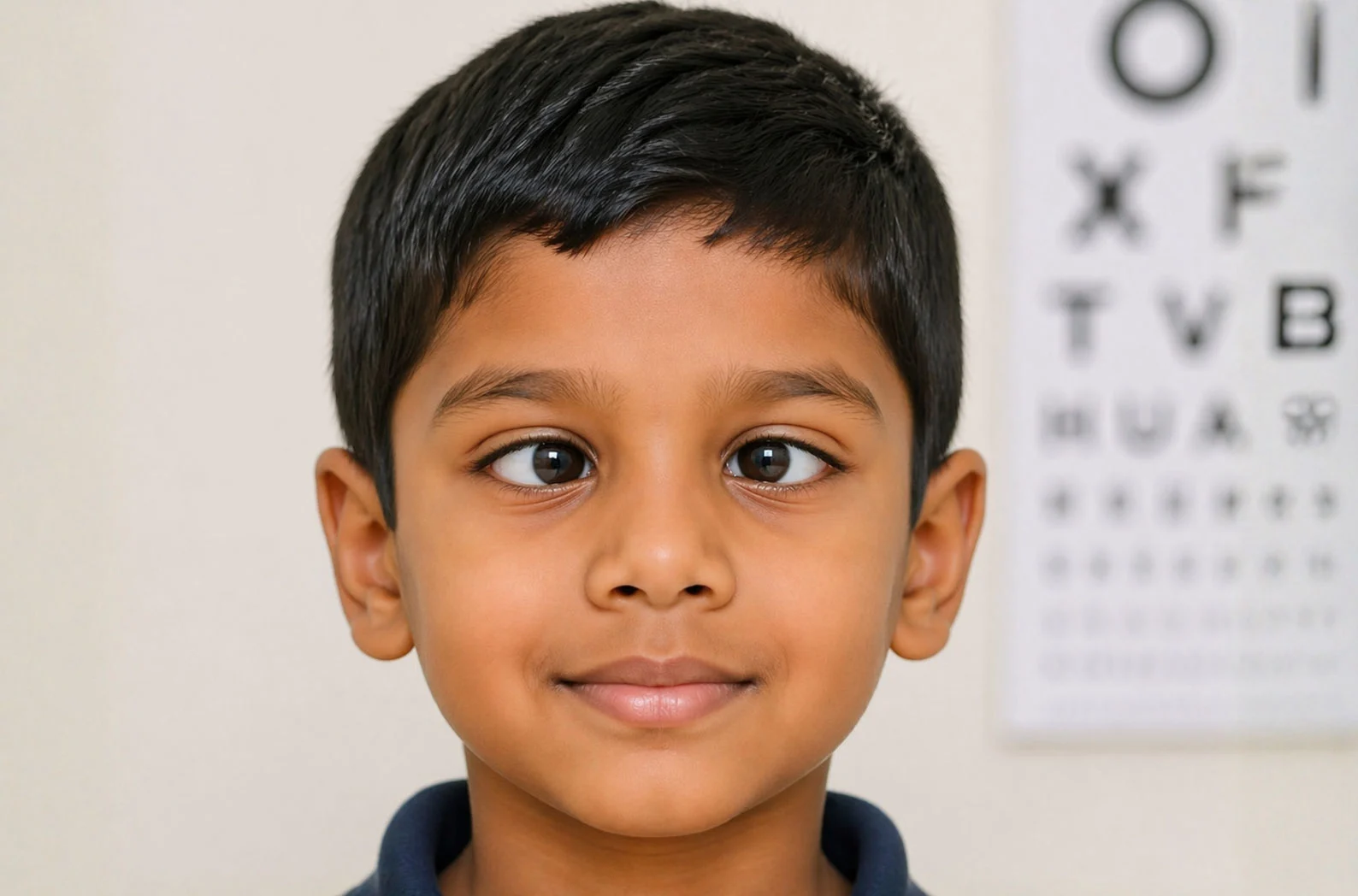
Squint, also called Strabismus, is a common eye condition where both eyes do not look in the same direction at the same time. One eye may turn inward, outward, upward, or downward while the other eye stays focused normally. This eye misalignment may happen constantly or occasionally and can affect both children and adults. If left untreated, it can lead to vision problems and reduced depth perception, making early diagnosis and Squint Treatment Bangalore essential for maintaining healthy vision.
Squint eye problems can impact depth perception, eye coordination, and overall vision quality. If left untreated, squint may lead to lazy eye (Amblyopia), eye strain, double vision, or permanent vision loss over time. Early diagnosis and timely squint treatment are important to improve eye alignment and protect vision.
At Advaith Eye Hospital, Banashankari, our experienced eye specialists provide advanced diagnosis and treatment for squint eye conditions in both children and adults using modern eye care technology.
The symptoms of squint may vary depending on the type and severity of eye misalignment. Some of the most common squint eye symptoms include:
If you notice these symptoms in yourself or your child, it is important to consult a squint specialist in Banashankari for a complete eye examination.
Squint can develop due to several reasons affecting the eye muscles, nerves, or brain coordination. Common causes of squint include:
Genetic Factors
A family history of squint eye problems may increase the risk of developing strabismus.
Nerve Disorders
Conditions that affect nerve control of the eye muscles can lead to eye misalignment.
Refractive Errors
Uncorrected eye power such as myopia (short sight), hyperopia (long sight), or astigmatism may force the eyes to work harder, causing squint.
Eye Muscle Imbalance
Weakness or improper functioning of eye muscles can affect eye coordination and alignment.
Neurological Conditions
Certain neurological or brain-related conditions may interfere with normal eye movement and coordination.
Eye Injuries
Trauma affecting the eye muscles or nerves can sometimes cause squint.
Medical Conditions
Conditions such as cerebral palsy, Down syndrome, or developmental disorders are often associated with squint eye problems.
Different types of squint require different treatment approaches. Common types include:
Our eye specialists at Advaith Eye Hospital, Banashankari carefully evaluate the condition and recommend the most suitable squint correction treatment. As a trusted center for Squint Treatment Bangalore, we provide personalized care using advanced diagnostic techniques and effective treatment options to help restore proper eye alignment and improve vision.
While some squint conditions may not be completely preventable, early diagnosis and proper eye care can help reduce complications and improve outcomes.
Important preventive measures include:
Routine pediatric eye screening is especially important because early squint treatment in children can help prevent lazy eye and long-term vision problems.
At Advaith Eye Hospital in Banashankari, advanced eye tests are performed to accurately diagnose squint and determine the severity of eye misalignment.
Visual Acuity Test
This test measures the clarity and sharpness of vision in each eye.
Cover Test
The doctor covers one eye at a time to identify which eye is affected and assess eye movement.
Hirschberg Test
This test checks the alignment of light reflections on the cornea to evaluate squint.
Refraction Test
Used to detect refractive errors like myopia, hyperopia, or astigmatism that may contribute to squint.
Ocular Motility Test
This examination evaluates the movement and coordination of the eye muscles.
If you are searching for:
Advaith Eye Hospital, Banashankari offers comprehensive squint diagnosis and advanced treatment options for both children and adults.
Our experienced ophthalmologists focus on early diagnosis, personalized treatment, and compassionate eye care to help improve vision, eye alignment, and overall quality of life. Early squint treatment can make a significant difference in protecting long-term eyesight and restoring confidence.
Proper diagnosis and early treatment are very important for correcting squint eye problems and protecting long-term vision. At Advaith Eye Hospital, Banashankari, we provide advanced squint diagnosis and treatment for children and adults with different types of strabismus, including convergent squint, divergent squint, paralytic squint, and lazy eye conditions.
Our experienced pediatric eye specialists and ophthalmologists carefully evaluate eye alignment, vision quality, and eye muscle coordination to provide the most effective squint correction treatment in South Bangalore.
Children are more commonly affected by squint, which is why regular pediatric eye check-ups are extremely important. At our Eye Hospital in Banashankari, detailed eye examinations are performed to identify the type and severity of squint eye problems.
Medical History Examination
During the first consultation, the eye specialist reviews the patient’s medical history to identify possible causes of squint. This may include:
Understanding the root cause helps doctors recommend the best squint treatment plan.
Visual Acuity Test
This eye test checks the clarity of vision in each eye. Patients are asked to read letters from an eye chart to evaluate visual strength and identify any vision problems associated with squint or lazy eye.
Corneal Light Reflex Test
In this test, the doctor checks the position of the eyes using light reflections on the cornea. This helps diagnose:
A detailed squint eye examination helps our specialists determine the most suitable treatment for proper eye alignment and vision improvement.
At Advaith Eye Hospital, Banashankari, treatment for squint eye depends on the type and severity of the condition. Our eye specialists provide personalized squint correction treatments for both children and adults.
Patching Therapy
Some children with squint may also develop lazy eye (Amblyopia), where one eye becomes weaker than the other. Before correcting the squint, the weaker eye is treated first.
Patching therapy involves covering the stronger eye to help improve the strength and vision of the weaker eye, leading to better eye alignment and coordination.
Corrective Glasses or Contact Lenses
In many cases, refractive errors such as myopia, hyperopia, or astigmatism can contribute to squint. Prescription glasses or contact lenses help correct focusing problems and improve eye alignment naturally.
Eye Exercises (Orthoptics)
Certain types of squint, especially convergence insufficiency, can improve with specialized eye exercises. These exercises strengthen eye muscle coordination and improve focusing ability for nearby objects.
Medications and Botox Treatment
Doctors may prescribe eye drops or ointments to support squint treatment in some cases.
For overactive eye muscles, Botox injections may also be recommended to temporarily relax the muscle and improve eye alignment.
Squint surgery is one of the most common and effective treatments for correcting eye misalignment. During squint eye surgery, the eye muscles are adjusted to help both eyes focus in the same direction.
Before the procedure, anesthesia is used to numb the area and ensure patient comfort.
Squint surgery may be performed on:
Currently, there is no laser treatment available for squint correction.
During surgery, the ophthalmologist may create a small opening in the tissue covering the eye to access and reposition the eye muscles.
Resection
In this procedure, the eye muscle is shortened by removing a small section to improve alignment and strengthen eye movement.
Recession
This procedure involves repositioning the eye muscle to reduce excessive pulling and improve balance between both eyes.
Plication
In plication surgery, the eye muscle is folded and reattached to shorten and strengthen it without removing muscle tissue.
At Advaith Eye Hospital, Banashankari, our doctors provide complete post-operative care to ensure smooth healing and better visual outcomes after squint surgery.
Important care tips after squint surgery include:
Advaith Eye Hospital offers advanced squint diagnosis, pediatric eye care, and personalized squint treatment using modern technology. Schedule your squint eye consultation today with our experienced eye specialists in Banashankari.
Yes, squint eyes, also known as strabismus, can be corrected with proper diagnosis and timely treatment. Depending on the type and severity of the squint eye condition, treatment options may include:
Early treatment is extremely important, especially in children, as it improves eye alignment, binocular vision, and overall visual development. At Advaith Eye Hospital, Banashankari, our experienced squint specialists provide personalized treatment plans for both children and adults with eye misalignment problems.
There is no fixed age limit for squint surgery. However, early treatment—especially before the age of six—can provide the best long-term visual outcomes in children.
In some cases, doctors may initially recommend squint correction exercises or glasses before considering surgery. If you notice symptoms such as crossed eyes, outward eye movement, or poor eye coordination, it is important not to delay an eye check-up.
At Advaith Eye Hospital in Banashankari, our pediatric eye specialists carefully assess each patient and recommend the most suitable squint treatment based on age, eye condition, and severity.
Like any surgical procedure, squint eye surgery may carry minor risks, but the success rate of strabismus surgery is generally very high when performed by experienced ophthalmologists.
Possible risks may include:
Our expert eye surgeons at Advaith Eye Hospital, Banashankari use advanced surgical techniques and provide complete post-operative care to ensure safe recovery and successful eye alignment correction.
Patients are advised to contact the doctor immediately if they notice unusual symptoms after surgery.
Squint eye surgery recovery time can vary from person to person. Most patients recover within a few days to several weeks, while complete healing may take around 3 to 12 weeks.
During the recovery period:
Following the doctor’s post-surgery care instructions carefully helps ensure faster healing and better surgical outcomes.
The cost of squint eye surgery in Bangalore may vary depending on:
Generally, squint eye treatment costs can range between ₹7,000 and ₹1,00,000 depending on the treatment plan and medical facilities provided.
Since squint correction surgery usually provides long-term results and improved quality of life, many patients consider it a valuable one-time investment in eye health.
At Advaith Eye Hospital, Banashankari, we provide affordable and advanced squint treatment options with personalized care.
Eye muscle surgery is one of the most effective treatments for correcting crossed eyes or eye misalignment. Squint conditions usually cannot be permanently corrected using home remedies or medications alone, which is why surgery is often recommended for moderate to severe cases.
During strabismus surgery:
The complete squint eye surgery procedure usually takes around 90 minutes.
At Advaith Eye Hospital in Banashankari, our experienced ophthalmologists perform advanced squint correction surgery with precision, safety, and compassionate care for both children and adults.
If you are searching for:
Advaith Eye Hospital offers advanced diagnosis, personalized treatment, and expert surgical care for all types of squint eye conditions.
Early treatment can help improve vision, eye coordination, confidence, and overall quality of life. Book your consultation today with our experienced squint specialists in Banashankari.